Choose a third-party cutting vendor by verifying equipment capability, tolerance standards, and inspection methods. Use this guide to compare services for your aluminum extrusion parts and protect your project timeline.
- Match the vendor's saw type and software to the complexity of your profile and the required length tolerance.
- Request sample parts before committing to a large production run to verify edge quality and flatness.
- Check the vendor's inspection capability to confirm they can measure and document the dimensions you need.
- Clarify handling and packaging requirements to protect cut edges during transport to your assembly line.
What kind of cutting service fits your profile?
The first step in selecting a vendor is understanding the mechanics of the cut itself. Aluminum extrusion cutting is not a single process. It depends on the profile shape, the alloy, and the tolerance requirements for the final part. A standard rectangular tube and a complex architectural sill have very different cutting challenges.
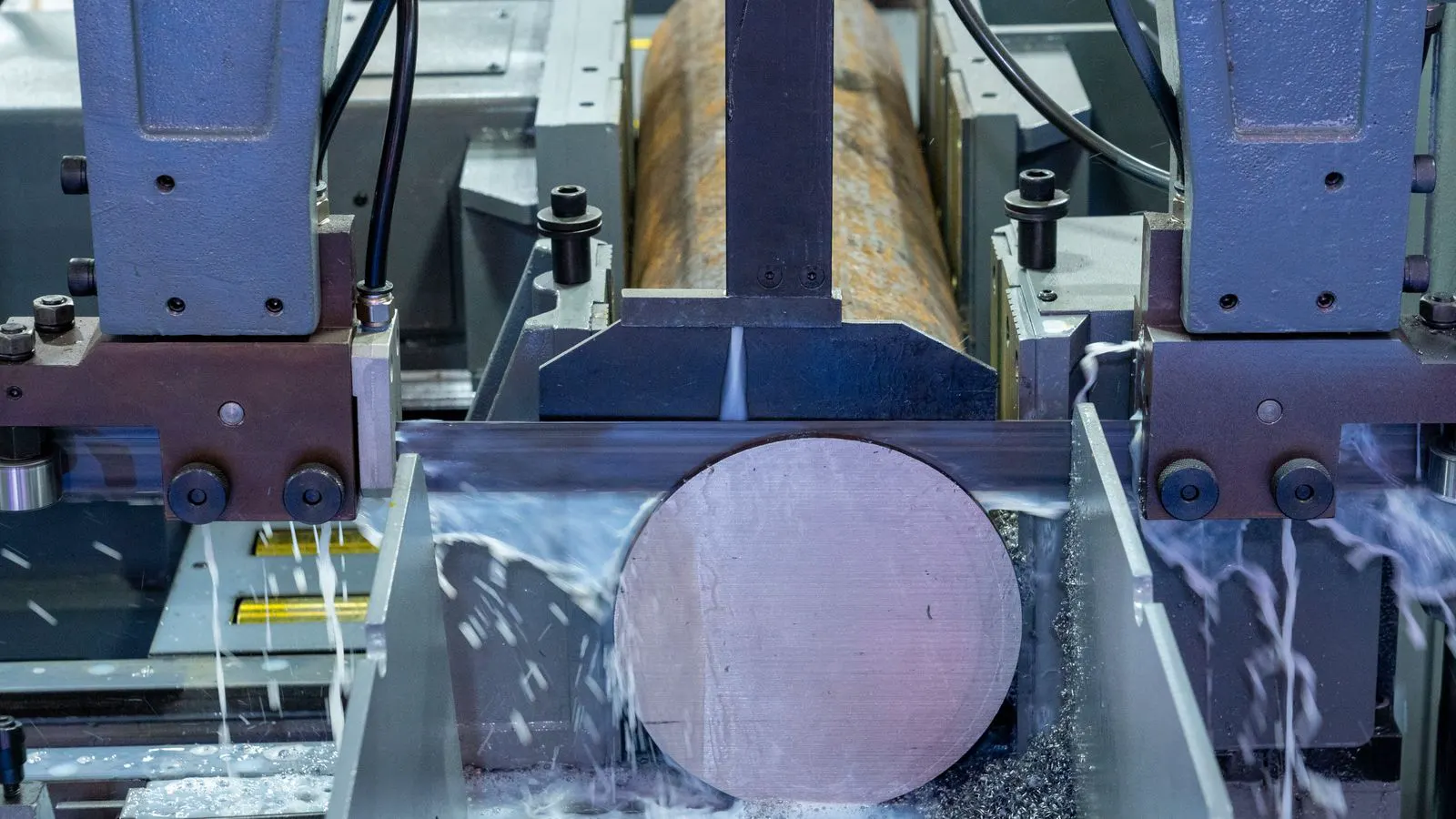
Straight-line cutting of simple profiles is usually handled by a sliding or guillotine saw. These machines offer high throughput and are well suited for long runs of identical parts. However, they may not handle very thin-walled profiles or intricate geometric shapes without risking the clamping area.
For more complex extrusions, a CNC saw or a multi-axis saw provides better control. These systems use software to map the profile and adjust blade depth and angle. This is often the right choice when you need to cut parts with varying lengths or when the profile has features that must not be crushed by the clamping jaws.
Your selection process should start with a technical review of your drawing. If the profile has tight flatness requirements, the method of cutting matters as much as the material. A vendor that relies on a single method for all jobs may not be the best fit for a project requiring high precision.
How to evaluate equipment and capability
When reviewing aluminum extrusion cutting services, you need to verify the physical capability of the equipment on the floor. Ask for a description of the saws used for your specific alloy and profile.
A typical capability check involves the following questions:
- What is the maximum profile length the saw can handle without reducing accuracy?
- Does the machine have a programmable feed rate?
- How does the saw handle thin walls or complex internal channels?
- Can the system account for the kerf width in its length calculations?
The kerf width is the width of the material removed by the blade. It is a constant factor in precision cutting. If a vendor does not program for kerf compensation, your parts will be consistently short or long. This is a common source of fit-up issues in assembly.
Also consider the condition of the equipment. A well-maintained saw with sharp blades produces a cleaner edge. A worn blade creates burrs and heat-affected zones. Ask if the vendor performs regular blade changes and how they manage maintenance schedules. This level of transparency is a good indicator of their overall quality control culture.
Tolerances and what they mean for your part
Buyers often request a tolerance like plus or minus one millimeter without understanding what that implies for the manufacturing process. Tolerances determine the cost and the method of cutting.
Tight tolerances require slower feed rates and higher machine stability. They also require more rigorous inspection. If your drawing calls for a tolerance of plus or minus two millimeters, a standard saw may be sufficient. If you need plus or minus half a millimeter, the vendor must demonstrate that they can hold that standard consistently across a batch.
Flatness is another critical dimension. A cut may be the correct length, but if the profile is twisted or the cut face is not square, the part will not fit into your assembly. Ask the vendor how they check squareness. Some use a digital caliper, while others use a CMM or a dedicated squareness gauge.
| Criterion | What to look for | Why it matters |
|---|---|---|
| Tolerance Standard | Clear written specification for length, flatness, and squareness. | Prevents disputes over acceptance criteria. |
| Inspection Method | Use of digital calipers, CMMs, or laser measurers. | Ensures data-based verification rather than visual checks. |
| Kerf Compensation | Software or manual adjustment for blade width. | Guarantees dimensional accuracy across multiple cuts. |
| Surface Finish | Minimal burrs and no heat discoloration. | Prevents damage to seals and gaskets during assembly. |
| Traceability | Batch codes or lot numbers on documentation. | Allows you to track material back to a specific supplier. |
Quality control and inspection methods
A reliable vendor will not just cut the part; they will verify it. The level of inspection you require depends on the criticality of the part. For structural components, you may need a full dimensional check. For general use, a spot check may be acceptable.
Ask about their inspection frequency. Do they check every part, or only a sample? For high-value projects, 100% inspection is often worth the cost. This ensures that no defective part reaches your facility.
The documentation is just as important as the physical part. You should receive a certificate of conformity or a test report. This document should list the part number, the material grade, the tolerance results, and the date of inspection. If a vendor is reluctant to provide this documentation, it is a red flag.
Also ask about edge preparation. Some cutting processes leave small burrs that can be dangerous or interfere with assembly. A good vendor will offer deburring or finishing as a standard part of the service. This removes the need for you to do secondary work in your own facility.
Handling, packaging, and logistics
The cut is only half the job. How the vendor handles the part after the blade stops determines whether it arrives at your site in usable condition. Aluminum profiles are soft and easily dented. A sharp cut edge can also be a safety hazard if not protected.
Review their packaging protocol. Do they use edge protectors or plastic caps? Do they wrap the profiles in foam or bubble wrap? For long profiles, they may use wooden crates or shrink-wrapped bundles. The packaging must be sufficient for the distance and conditions of the transport.
Coordinate the drop-off time with your production schedule. If the parts arrive too early, they may take up floor space. If they arrive too late, your line may stop. A good vendor will offer flexible delivery windows and real-time tracking.
Ask about their return policy for defective parts. What happens if a batch arrives with a cutting error? A professional vendor will have a clear process for exchanging parts or issuing a credit. This agreement should be in writing before the first order is placed.
How to compare quotes and vendors
When you request quotes, do not just compare the unit price. A lower price often comes with hidden costs. Ask for a breakdown of the quote. Does it include material, cutting, deburring, packaging, and freight?
A transparent quote will list the material cost separately from the service cost. This allows you to see if the material price is reasonable for the alloy and thickness you are ordering. If the material cost is missing, the vendor may be using a cheaper grade than you specified.
Request samples. Before placing a large order, ask for a small batch to be produced and shipped. Inspect these samples against your drawing. Check the dimensions, the edge finish, and the packaging. This low-risk step can save you from a major production stoppage later.
If two vendors offer similar prices and capabilities, choose the one with better communication and documentation. A vendor who responds quickly to technical questions and provides clear documentation is easier to work with in the long run. The relationship with your cutting partner will be ongoing, so the quality of communication is a key factor in your long-term success.
Decision checklist for selecting a vendor
Before you sign a contract, run through this checklist to ensure you have selected a reliable partner for your cutting aluminum extrusion needs.
- Verify Equipment: Confirm the saw type can handle your specific profile shape and thickness without damage.
- Confirm Tolerances: Ensure the vendor can meet your dimensional requirements, including flatness and squareness.
- Review Inspection: Ask how they measure and document the parts. Request a sample report.
- Check Packaging: Inspect their packaging method to ensure the parts will arrive without damage.
- Test Communication: Send a technical question and evaluate the speed and accuracy of the response.
- Run a Pilot: Order a small batch to verify quality and fit before committing to full production.
By following these steps, you reduce the risk of receiving parts that do not fit your assembly. You also build a foundation of trust with a vendor who understands your technical requirements and respects your production schedule.
Frequently asked questions
Do I need to provide the material or can the vendor source it?
Most vendors can source the material if you provide the alloy and profile specification. Some require you to supply the stock to ensure quality consistency.
How long does it take to get a sample part?
Turnaround times vary by vendor and complexity. Simple straight cuts often take a few days, while complex CNC cuts may take longer due to programming and setup.
Can you cut profiles with thin walls?
Yes, but it requires careful clamping and a specialized saw setup to prevent crushing. Standard saws may not be suitable for very thin walls.
What is the most common mistake buyers make when selecting a vendor?
Focusing only on the price per piece. Buyers often overlook the cost of inspection, packaging, and the risk of receiving parts that fail to meet tight tolerances.
How should I specify the finish on the cut edge?
Specify if you need deburring, chamfering, or a specific surface finish. If you do not specify, the vendor will likely provide a standard finish that may leave small burrs.